What Is Clopening and Why Is It a Problem?
Learn what clopening means in shift work, how closing then opening shifts impact employee fatigue and safety, typical recovery periods (8–10 hours minimum), industries most affected (retail, food service), and strategies to prevent clopening shifts.

What Is Clopening?
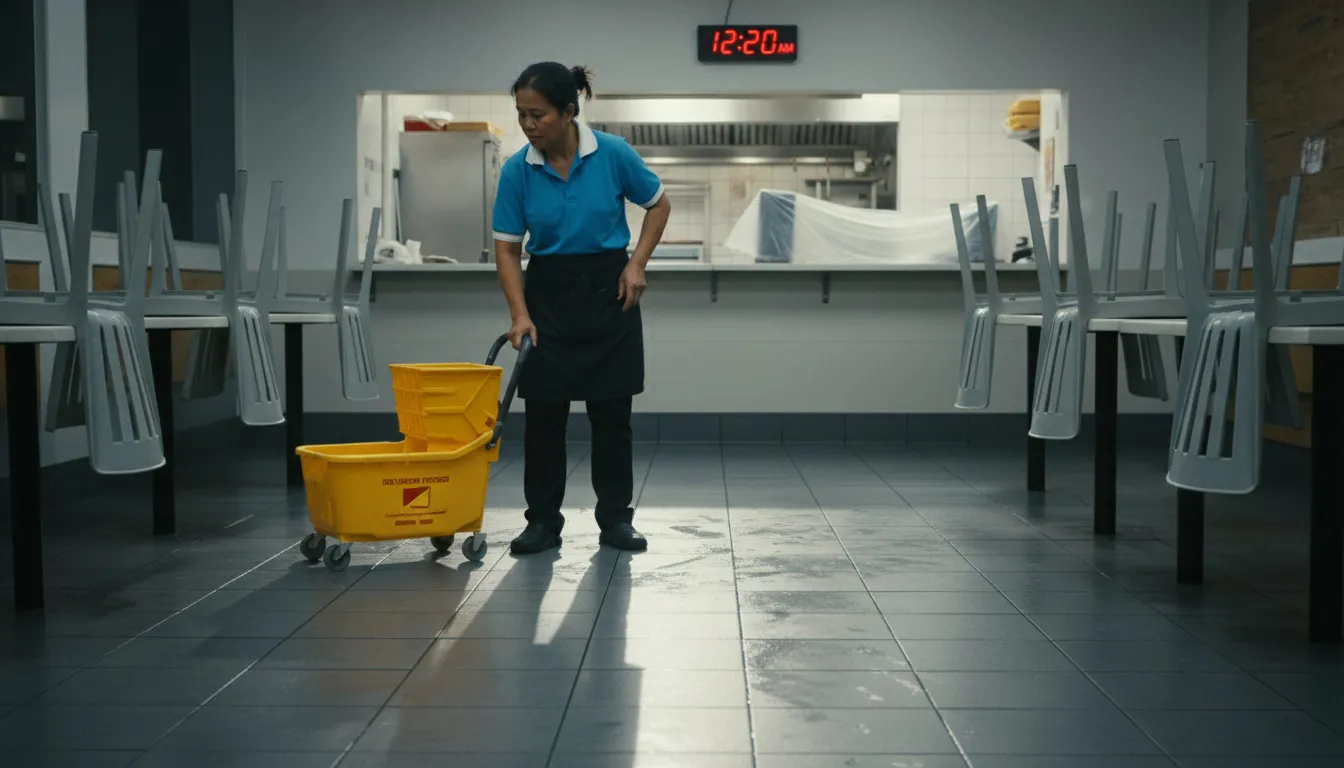
Clopening is a scheduling practice where an employee works a closing shift late at night and returns to open the same location early the following morning, typically leaving less than 8–10 hours between shifts. The term combines “closing” and “opening” to describe this problematic back-to-back scheduling pattern.
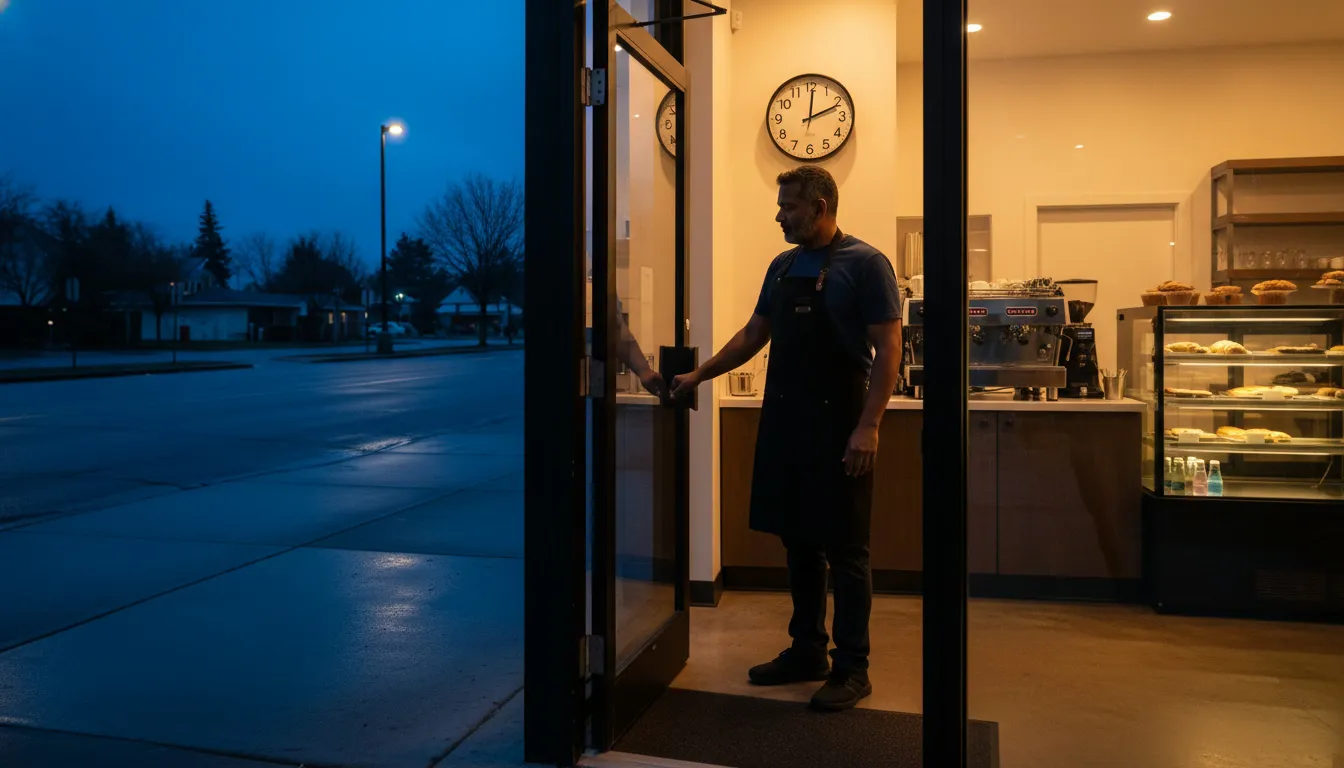
A typical clopening scenario involves closing a store at 11 PM, completing closing duties until midnight, then returning to open at 6 AM—providing only 6 hours between shifts, often resulting in 4–5 hours of actual sleep when accounting for commute and personal needs.
Quick Answer
Clopening means scheduling someone to close one night and open the next morning with insufficient rest between shifts (typically less than 8–10 hours). This practice is common in retail and food service but increasingly restricted due to safety and health concerns.
According to research published in the Journal of Occupational and Environmental Medicine, workers with less than 11 hours between shifts have significantly higher rates of fatigue-related incidents, reduced productivity, and increased health risks.
Why Is Clopening a Problem?
Clopening isn’t just inconvenient—it creates serious health, safety, and performance issues that hurt both workers and businesses.
Sleep Deprivation
Picture this: You finish closing duties at midnight and need to be back by 6 AM. That’s 6 hours between clock-out and clock-in. Subtract commute time, getting ready, and the time it takes to actually fall asleep, and you’re looking at maybe 4–5 hours of actual sleep.
Adults need 7–9 hours. You’re running on half that.
Increased Injury Risk
Fatigue doesn’t just make you tired—it makes you dangerous. The National Safety Council reports that workers with less than 8 hours between shifts experience 30–50% higher accident rates.
When you’re exhausted, reaction times slow, decision-making suffers, and physical coordination falters. In food service kitchens or retail stockrooms, that’s how people get hurt.
Chronic Fatigue
One clopen is rough. Repeated clopening shifts create cumulative sleep debt that compounds over time:
- Ongoing exhaustion that coffee can’t fix
- Weakened immune systems (constant colds and flu)
- Increased cardiovascular risk
- Higher rates of anxiety and depression
Your body never catches up.
Reduced Performance
Tired brains don’t work well.
Cognitive performance drops sharply after insufficient sleep. Workers struggle to concentrate, process information slower, forget things, and deliver worse customer service.
You’re physically present but mentally checked out.
Turnover and Morale
Clopening shows up constantly in exit interviews from retail and food service workers. When you repeatedly schedule people for clopens, you’re telling them their wellbeing doesn’t matter.
They hear that message loud and clear—and leave for jobs with more reasonable schedules.
What Industries Use Clopening Shifts Most Often?
| Industry | Common Clopen Scenarios | Typical Hours Between Shifts | Worker Impact |
|---|---|---|---|
| Retail | Store closing (10 PM) → Opening (6–7 AM) | 5–8 hours | High fatigue, frequent complaints |
| Food Service | Restaurant closing (11 PM–1 AM) → Opening (6–8 AM) | 5–7 hours | Safety risks, burnout |
| Coffee Shops | Cafe closing (9 PM) → Opening (5–6 AM) | 6–8 hours | Chronic sleep deprivation |
| Fast Food | Drive-through closing (midnight) → Opening (5–6 AM) | 5–6 hours | High turnover, performance issues |
| Convenience Store | Store closing (11 PM) → Opening (6 AM) | 6–7 hours | Safety concerns for lone workers |
| Hospitality | Hotel desk closing → Opening | 6–8 hours | Guest service quality decline |
| Gas Stations | Station closing (10 PM) → Opening (5–6 AM) | 6–7 hours | Fatigue-related errors |
Retail and food service industries have the highest incidence of clopening, particularly among part-time workers who may have multiple jobs and already compressed sleep schedules.
What Are the Legal Restrictions on Clopening?
Federal law does not prohibit clopening or mandate minimum rest periods between shifts. However, several states and cities have enacted predictive scheduling laws with rest requirements:
Jurisdictions with Rest Period Requirements
- New York City: 11 hours minimum rest for fast food workers; premium pay required if violated
- Oregon (Portland): 10 hours minimum rest for retail, food service, and hospitality workers
- Seattle: 10 hours minimum rest for retail workers in covered businesses
- Philadelphia: 9 hours minimum rest for retail workers in large chains
- San Francisco: 8 hours minimum rest for formula retail and restaurants
- Los Angeles: Variable requirements by industry
Penalty Structures
When clopening is scheduled in violation of local rest requirements, employers typically must pay:
- 1.5× hourly rate for all hours worked during the rest period
- Additional predictability pay ranging from $10–$100 per violation
- Fines and penalties for repeated violations
Many mandatory overtime regulations also interact with rest period requirements, potentially triggering additional compensation when clopening shifts extend total weekly hours.
How Much Rest Should There Be Between Shifts?

| Organization/Standard | Recommended Minimum | Reasoning |
|---|---|---|
| National Sleep Foundation | 10–12 hours | Ensures 7–8 hours sleep plus commute |
| OSHA Guidelines | 8–10 hours | Reduces fatigue-related incidents |
| EU Working Time Directive | 11 hours | Protects worker health and safety |
| Oregon Law | 10 hours | Balance between worker rest and scheduling |
| NYC Fast Food Law | 11 hours | Addresses acute scheduling issues |
Best practice for shift-based businesses is 10–12 hours minimum between shifts, allowing for adequate sleep, commute time, and personal responsibilities. This applies regardless of whether workers are on 3rd shift, 2nd shift, swing shift, or rotating schedules. Different employment status classifications may have varying rest requirements.
What Are Real-World Examples of Clopening Impact?
Retail Chain Example
A national retail chain regularly scheduled assistant managers to close stores at 11 PM (finishing by midnight) and reopen at 7 AM. After implementing a 10-hour minimum rest policy:
- Workplace accidents decreased by 37%
- Employee retention improved by 22%
- Customer satisfaction scores increased 8%
- Workers reported 45% improvement in work-life balance
Fast Food Restaurant Case
A fast food franchise scheduled shift leads for clopening 2–3 times weekly. Workers reported:
- Average of 4.5 hours sleep on clopen nights
- 3× higher error rates during opening shifts
- Significant stress and resentment
- 60% of clopening workers quit within 6 months
After eliminating clopening and hiring one additional shift lead, turnover costs decreased by more than the additional labor expense.
Coffee Shop Chain
A regional coffee chain eliminated all shifts with less than 10 hours rest. Results after 12 months:
- 28% reduction in staff turnover
- $47,000 annual savings in recruitment and training costs
- Improved drink quality and speed of service
- Enhanced employer brand attracting higher-quality applicants
How Do You Prevent Clopening in Your Schedules?
Set Minimum Rest Period Policies
Establish a company-wide policy requiring 10–12 hours between shifts. Configure scheduling software to flag or prevent violations automatically.
Hire Sufficient Coverage
Understaffing is the primary driver of clopening. Calculate coverage needs for opening and closing shifts separately, then hire enough workers to avoid scheduling conflicts. Consider hiring specialized closing and opening teams.
Use Shift Rotation Strategies
Implement rotating schedules that distribute closing and opening shifts across multiple workers rather than concentrating both on the same individuals. Ensure workers who close on Friday don’t open on Saturday.
Build Scheduling Transparency
Use tools that show workers their upcoming shifts well in advance, allowing them to identify potential clopens and request adjustments before schedules are finalized. Many predictive scheduling laws require 10–14 days advance notice.
Cross-Train Workers
Train multiple employees to handle both opening and closing procedures so you’re not dependent on a single person for both shifts. This provides scheduling flexibility without forcing clopens.
Monitor and Audit Schedules
Regularly review published schedules to identify unintentional clopens. Track rest periods between shifts and address patterns where specific workers are repeatedly scheduled too closely.
Organizations managing complex shift patterns often use the same principles that apply to double shifts—ensuring adequate rest and recovery time between work periods.

What Are Alternatives to Clopening?
| Strategy | Description | Cost Impact | Worker Benefit |
|---|---|---|---|
| Dedicated openers/closers | Hire separate teams for opening and closing shifts | 5–10% labor increase | High schedule stability |
| Mid-shift handoffs | Use overlap shifts so closers don’t need to open | 3–7% labor increase | Moderate improvement |
| Rotating schedules | Distribute closing and opening across team members | Minimal | Distributes burden |
| Compressed close times | Finish closing duties earlier to extend rest period | Minimal | Moderate improvement |
| Later opening times | Delay opening by 30–60 minutes on days after late closes | Variable (revenue) | Significant rest gain |
| Manager coverage | Salaried managers cover either closing or opening | Overtime costs | Protects hourly staff |
The most effective long-term solution is hiring sufficient staff to avoid scheduling any individual worker for both closing and opening shifts within a 24-hour period.
The Bottom Line
Clopening—scheduling workers to close at night and open the next morning with insufficient rest—creates serious health, safety, and performance problems. While still legal in most U.S. jurisdictions, best practices and emerging regulations recommend 10–12 hours minimum rest between shifts.
Eliminating clopening requires adequate staffing, thoughtful scheduling policies, and technology to prevent violations. The investment typically pays for itself through reduced turnover, improved safety, and better customer service.
Try ShiftFlow’s scheduling tools with built-in rest period enforcement to automatically prevent clopening and other harmful scheduling patterns.
Sources
- Journal of Occupational and Environmental Medicine – Shift Work and Health
- National Safety Council – Fatigue and Workplace Safety
- U.S. Department of Labor – Work Schedules
- NYC Department of Consumer and Worker Protection – Fair Workweek Law
Further Reading
- 2nd Shift Work Guide – Managing evening schedules effectively
- 3rd Shift Complete Guide – Overnight shift best practices
- Mandatory Overtime Rules – Understanding overtime requirements
Frequently Asked Questions
What is clopening?
Clopening is scheduling an employee to work a closing shift at night and return for an opening shift the next morning, typically with less than 8–10 hours between shifts.
Why is clopening bad for employees?
Clopening causes sleep deprivation (often 4–5 hours of sleep), increased injury risk (30–50% higher accident rates), chronic fatigue, reduced performance, and decreased job satisfaction.
What is the minimum rest period between shifts?
While federal law has no minimum, best practices recommend 10–12 hours. Some cities require 8–11 hours depending on industry. Oregon requires 10 hours, New York City requires 11 hours for fast food workers.
Is clopening illegal?
Clopening is illegal in jurisdictions with predictive scheduling laws requiring minimum rest periods (NYC, Portland, Seattle, Philadelphia, San Francisco, LA). It remains legal in most states without penalties.
How many hours should be between closing and opening shifts?
Best practice is 10–12 hours minimum to allow 7–8 hours sleep plus commute and personal time. Many regulations require 8–11 hours minimum.
What industries use clopening most?
Retail, fast food, coffee shops, restaurants, convenience stores, and hospitality have the highest clopening rates—particularly for part-time workers.
How do you prevent clopening?
Prevent clopening by setting 10-hour minimum rest policies, hiring sufficient staff for separate opening/closing teams, using scheduling software with rest period enforcement, and rotating schedules to distribute shifts fairly.
What happens if you violate rest period laws?
Violating rest period laws typically requires paying 1.5× hourly rate for hours worked during required rest periods, plus predictability pay penalties of $10–$100 per violation.