
How to Prevent Buddy Punching in 2026
Buddy punching costs employers $373 million annually and affects 75% of U.S. businesses. Learn how to prevent buddy punching with biometric time clocks, GPS verification, facial recognition systems, and automated time tracking that eliminates time card fraud.
How to Prevent Buddy Punching in 2026
Buddy punching—when one employee clocks in for another who isn’t actually there—costs U.S. employers an estimated $373 million annually. With 75% of businesses affected and 30% of employees admitting to the practice, it’s one of the most common forms of time card fraud.
The solution? Biometric time clocks, GPS verification, and automated systems that make it impossible for employees to clock in for each other. Companies using these technologies report 27% fewer payroll disputes and complete elimination of buddy punching.
Quick Answer
Prevent buddy punching with biometric time clocks (facial recognition or fingerprint scanning), GPS-enabled mobile time tracking, clear anti-fraud policies, and automated systems that flag unusual patterns. Biometric verification makes it impossible for employees to clock in for absent coworkers, eliminating this $373 million problem entirely.
Why Is Buddy Punching a Problem?
Let’s start with the obvious: you’re losing money. Buddy punching accounts for more than 2.2% of total payroll costs, according to Nucleus Research. If you’ve got $5 million in annual payroll, that’s $110,000 walking out the door every year from buddy punching alone.
And it’s not just happening at a few bad apples. 74% of employers deal with payroll losses from buddy punching. On the employee side, 30% admit to clocking in for absent coworkers, and one in five workers have participated in this at some point in their career.
But the damage goes beyond the direct financial hit. Buddy punching hides your real absenteeism problem. When Mike clocks in for Sarah who’s stuck in traffic (or maybe still in bed), you can’t see the pattern of tardiness or attendance issues. You can’t schedule effectively, and you definitely can’t enforce attendance policies when the records are fake.
There’s also a fairness issue. Employees who follow the rules notice when their coworkers are gaming the system. That breeds resentment and kills morale.
And legally? Paying employees for hours they didn’t work inflates your labor costs, messes up overtime calculations, and can create FLSA compliance headaches. If overtime gets improperly claimed through buddy punching, you’ve got a problem. Plus, if you discipline one employee for buddy punching but look the other way for others, you’re opening yourself up to discrimination lawsuits.
How Do Biometric Time Clocks Prevent Buddy Punching?
Here’s the simple answer: you can’t share your face or fingerprint.
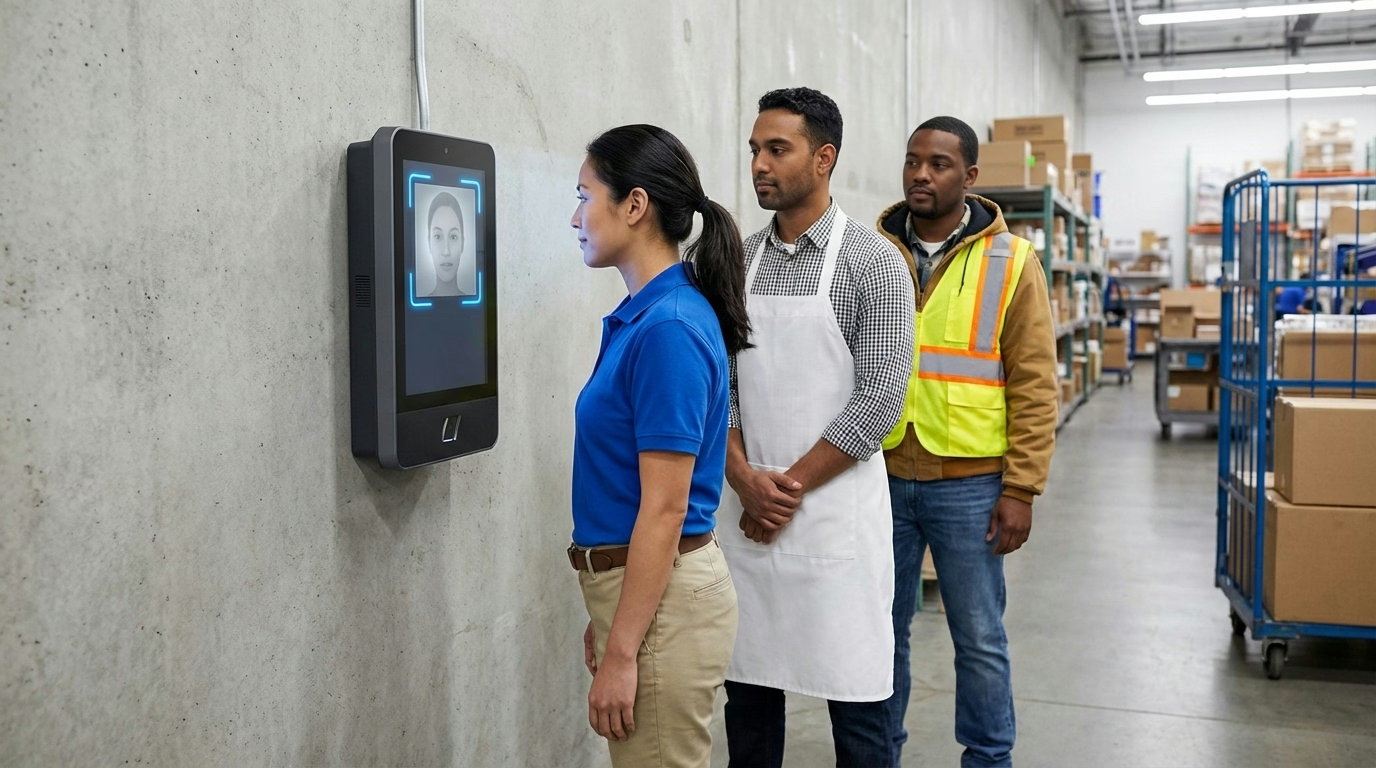
Facial recognition is becoming the go-to solution. Timeero notes it’s the preferred option because it’s contactless (nobody wants to touch the same fingerprint scanner after a hundred other people) and lightning fast. In 2026, 62% of biometric payment methods worldwide use facial recognition.
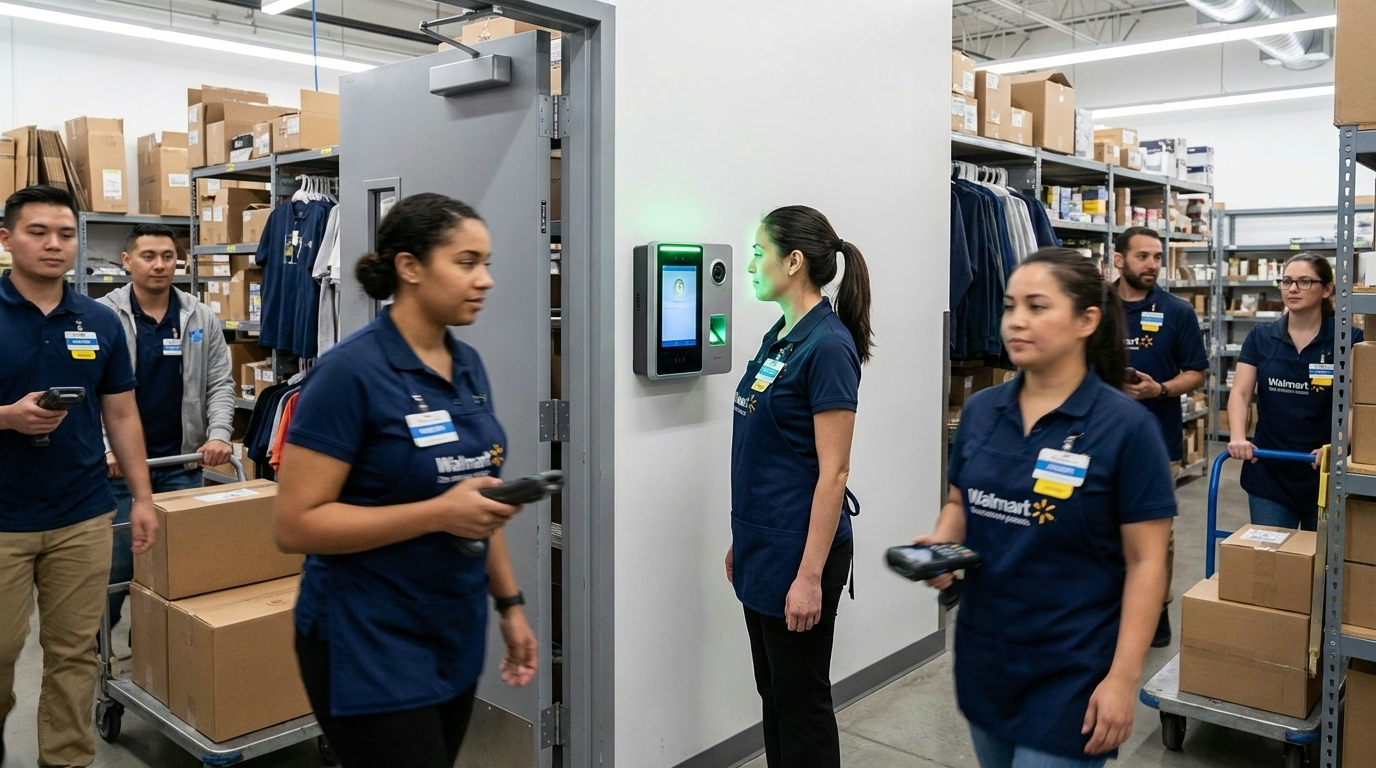
How it works: the system captures your face when you clock in, compares it to your enrolled facial template, and verifies your identity in under a second. Since you can’t transfer your face to a coworker, buddy punching becomes physically impossible.
One important note—modern systems include “liveness detection.” Here’s why that matters: PhotoAID found that nearly 42% of older facial recognition systems could be fooled by someone just holding up a printed photo. The newer 2026 systems detect whether you’re actually there in person, not just showing a picture on your phone.
Fingerprint scanning is the more established option. You place your finger on the scanner, it matches your unique fingerprint pattern against what’s enrolled in the system, and either lets you clock in or doesn’t. Like facial recognition, fingerprints can’t be shared or transferred.
Some high-security environments use multimodal systems that combine both facial recognition and fingerprint scanning. That’s usually overkill unless you’re dealing with employees who have access to particularly valuable assets.
The tech is catching on fast—among workers aged 18-34, 15% now use facial recognition for clocking in and out at work, according to Passport Photo Online. That drops to 9% for ages 35-54 and just 3% for those 55+. At the enterprise level, Fortune 500 companies are tracking 22 million daily employee check-ins using facial analytics.
How Does GPS Verification Prevent Buddy Punching?
Location-based authentication: GPS-enabled mobile time tracking apps verify that employees are physically at the correct work location when they clock in. Employees install the app on their phones, and when they attempt to clock in, the system checks their GPS coordinates against allowed locations.
Geofencing: Creates virtual boundaries around work sites. Employees can only clock in when their phone’s GPS shows them inside the geofence. For businesses with multiple locations—like retail stores, restaurants, or construction sites—geofencing ensures employees are at the assigned location.
Timestamp with location: Every clock-in event records both the time and GPS coordinates, creating an audit trail that proves physical presence. Managers can review location data if hours seem suspicious.
Best for field workers: GPS verification is particularly effective for industries with remote or mobile employees—electrical services, plumbing, HVAC, delivery, and sales teams working outside a central office.
Privacy considerations: GPS tracking only activates during clock-in/out events, not continuous tracking throughout the day. Clear policies should explain when and how location data is collected and used.

What Other Technologies Prevent Buddy Punching?
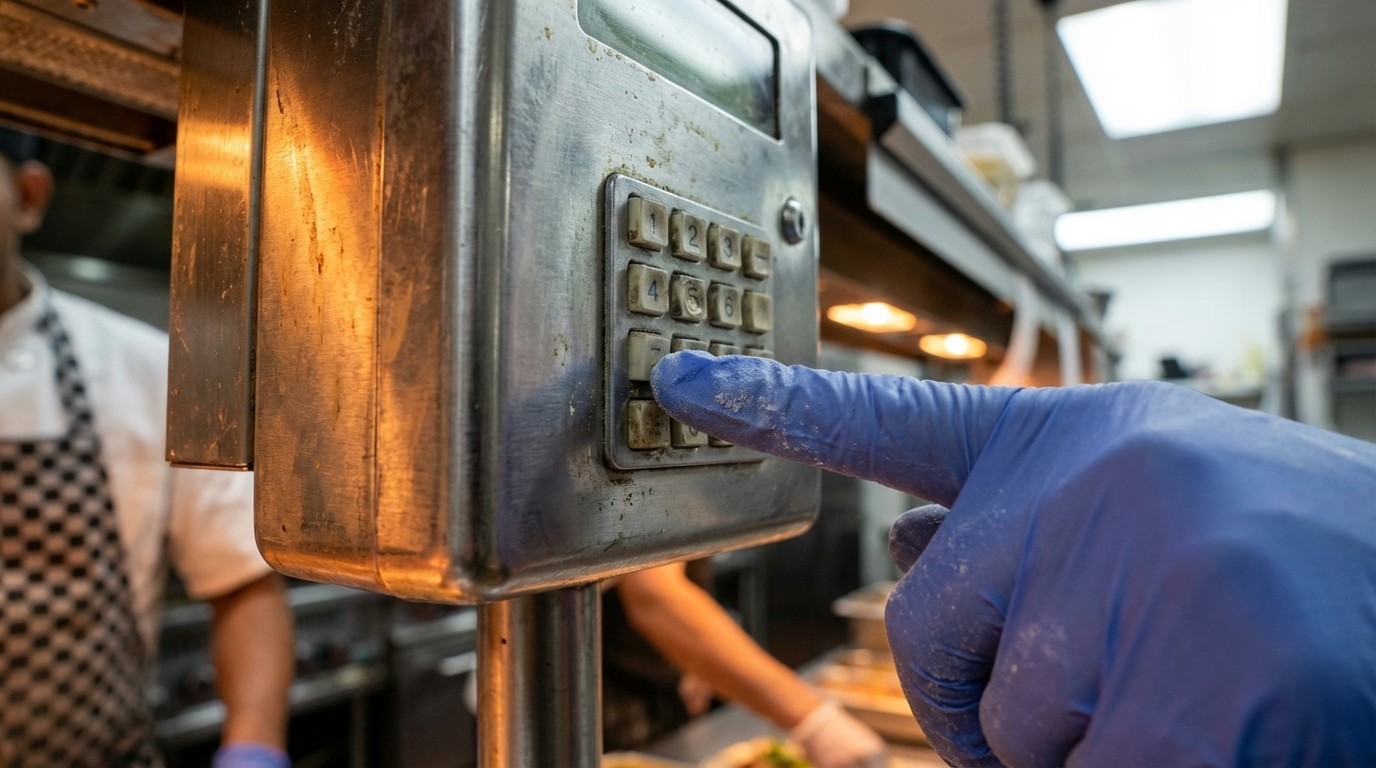
PIN codes with supervision: Requiring employees to enter a unique PIN code provides some protection, but only if combined with manager supervision. PINs alone don’t prevent buddy punching—employees can share their codes.
Badge or card systems with cameras: RFID badges or magnetic stripe cards paired with cameras that photograph each clock-in event create accountability. While not as secure as biometrics, the photo evidence deters buddy punching.
Time clock kiosks with video: Installing cameras at time clock locations captures who’s clocking in. While someone could still use a coworker’s badge, video evidence makes it easy to identify violations during audits.
Mobile apps with selfie verification: Some mobile time tracking apps require employees to take a selfie when clocking in, which the system compares to their profile photo. This adds a verification layer without requiring dedicated biometric hardware.
Activity monitoring for remote workers: For office or remote employees, computer activity tracking verifies that someone is actually working during clocked hours. If an employee is clocked in but shows no computer activity, it flags for review.
How Do Prevention Methods Compare?
Biometric (facial recognition or fingerprint) — Best for: Fixed locations with high-volume clock-ins. Pros: 100% prevents buddy punching, fast verification (under 1 second), no passwords to remember. Cons: Requires hardware ($200-$1,000 per terminal), some employees have privacy concerns. Effectiveness: Eliminates buddy punching entirely.
GPS + mobile app — Best for: Field workers, multi-location teams, remote employees. Pros: No dedicated hardware needed, proves location at clock-in, works anywhere. Cons: Requires employees to use personal or company phones, battery drain, privacy concerns about location tracking. Effectiveness: Prevents remote buddy punching, ensures physical presence.
PIN codes — Best for: Low-security environments with high trust. Pros: Simple, no hardware costs, easy to implement. Cons: Employees can easily share PINs, provides minimal protection. Effectiveness: Does not prevent buddy punching unless combined with supervision or cameras.
Badge/card + camera — Best for: Existing badge systems that need upgrade. Pros: Works with current badge infrastructure, photo evidence deters fraud. Cons: Employees can still use someone else’s badge, requires manual review of photos. Effectiveness: Reduces buddy punching but doesn’t eliminate it—requires management oversight.
What Policies Help Prevent Buddy Punching?
Clear anti-fraud policy: Create a timekeeping policy that explicitly prohibits buddy punching, defines it as theft, and outlines progressive discipline—first offense written warning, second offense suspension, third offense termination.
Mandatory training: During onboarding, explain what buddy punching is, why it’s prohibited, how the company detects it, and what the consequences are. Have employees sign an acknowledgment that they understand the policy.
Consistent enforcement: Apply consequences uniformly. If you terminate one employee for buddy punching but only warn another, you create legal exposure and undermine the policy’s credibility.
Anonymous reporting: Provide a way for employees to report buddy punching they witness. Employees who follow the rules often know when coworkers are cheating and may report it if there’s a confidential channel.
Regular audits: Review time records monthly for suspicious patterns—employees who always clock in at exactly the same time, multiple employees clocking in within seconds of each other, or clock-ins that don’t match manager observations of who was present.
Manager accountability: Hold supervisors responsible for reviewing timesheets before payroll runs. If buddy punching occurs repeatedly on a manager’s team without being caught, address the manager’s oversight as well.
What’s New for Preventing Buddy Punching in 2026?
Anti-spoofing becomes non-negotiable: In 2026, liveness detection shifted from a premium feature to a baseline requirement. With 42% of older facial recognition systems vulnerable to photo spoofing, businesses are upgrading to anti-spoofing technology that verifies you’re actually there in person. If your system can still be fooled by someone holding up a phone with a coworker’s photo, you’re running outdated tech.
Contactless wins the adoption race: The post-pandemic preference for contactless systems solidified facial recognition as the dominant choice in 2026. Mordor Intelligence reported facial recognition held 58% of the biometric workplace market by 2024, and that lead has only grown as companies replace fingerprint scanners nobody wants to touch after hundreds of other employees.

How Much Do Prevention Solutions Cost?
Biometric time clocks: Hardware costs range from $200-$1,000 per terminal depending on features (facial recognition, fingerprint, or both). Cloud-based time tracking software typically costs $3-$8 per employee per month.
GPS mobile apps: Most time tracking software with GPS verification costs $4-$10 per employee per month with no hardware required since employees use their own smartphones.
ROI calculation: If buddy punching costs you 2.2% of payroll and you spend $5,000 on biometric terminals plus $5/employee/month for software, the payback period is typically under 6 months for companies with 50+ employees.
Example: A 100-employee company with $3 million annual payroll loses $66,000/year to buddy punching (2.2%). Investing $5,000 in hardware + $6,000/year in software ($5/employee/month) saves $60,000 annually after costs—a 10x ROI in year one.
What Are Best Practices for Implementation?
Pilot first: Test biometric systems with one department or location before rolling out company-wide. This identifies technical issues, refines processes, and creates internal champions.
Communicate early: Explain why the company is implementing biometric time clocks, how it will work, privacy protections, and benefits (faster clock-in, fewer payroll errors). Address concerns proactively.
Enroll carefully: Take time to properly enroll each employee’s biometric data. Poor quality enrollment leads to false rejections, frustrating employees and undermining adoption.
Provide backup methods: Have a manual override process for when technology fails—dead phone batteries, facial recognition issues due to lighting, network outages. Require manager approval for manual entries.
Monitor effectiveness: Track payroll accuracy, dispute resolution time, and labor cost percentage before and after implementation. Quantify the improvement to justify the investment.
Update policies: Revise your timekeeping policy to reflect new technology, explain how biometric data is stored and protected, and reinforce that buddy punching remains prohibited regardless of the system in place.
What’s the Bottom Line?
Buddy punching costs U.S. employers $373 million annually and affects 75% of businesses. It accounts for more than 2.2% of total payroll costs and is one of the most common forms of time card fraud.
Here’s what you need to know:
- 30% of employees admit to buddy punching
- Biometric time clocks eliminate buddy punching entirely by verifying unique biological identifiers
- Facial recognition is preferred (58% market share) due to contactless operation and speed
- GPS verification ensures field workers are physically present at work locations
- Companies using biometric systems report 27% fewer payroll disputes
- The biometrics market is exploding—$45B in 2025, projected $173B by 2034
- 2026 brings liveness detection, edge processing, and behavioral biometrics
- ROI is typically under 6 months for companies with 50+ employees
Ready to eliminate buddy punching? ShiftFlow’s time tracking tools use GPS verification, automated validation, and integration-ready systems that prevent time card fraud. Explore our solutions or view pricing.
Sources
- Payroll Partners – Buddy Punching and Time Theft: Hidden Risks That Cost Employers Millions
- TimeTrex – Solutions to Buddy Punching in 2025
- Timeero – 7 Best Face Recognition Attendance System in 2026
- Passport Photo Online – 47+ Biometric Statistics, Facts, and Trends [2026]
- PhotoAID – 29+ Biometrics Statistics for 2026
- IMARC Group – Biometrics Market Size, Growth Analysis & Report by 2033
- Mordor Intelligence – Facial Recognition Market Size, Trends, Growth & Share Analysis 2025-2030
- Research Nester – Next-Gen Biometric Authentication Market Size Report 2035
- SmartBarrel – How To Eliminate Time Theft Using Modern Technologies
Further Reading
- Time Card Fraud Explained – All types of time theft and detection methods
- Time Clock Guide – How modern time clocks track employee hours
- Timekeeping Policy – Creating clear time tracking rules
Frequently Asked Questions
What is buddy punching?
Buddy punching is when one employee clocks in or clocks out for another employee who is not actually present at work. It is a form of time card fraud where employees get paid for hours they did not work. About 30% of employees admit to buddy punching, and it affects 75% of U.S. businesses annually.
How much does buddy punching cost employers?
Buddy punching costs U.S. employers an estimated $373 million annually. It accounts for more than 2.2% of total payroll costs for affected employers. About 74% of employers experience payroll losses from buddy punching, with losses averaging thousands of dollars per employee per year.
How can biometric time clocks prevent buddy punching?
Biometric time clocks prevent buddy punching by verifying each employee’s unique biological identifiers—fingerprints or facial features—when they clock in. Since biometric data cannot be shared or transferred, it is impossible for one employee to clock in for another. Companies using biometric systems report 27% fewer payroll disputes and complete elimination of buddy punching.
What is the best technology to prevent buddy punching?
Facial recognition is currently the preferred technology, holding 58% of the biometric market share in 2024. It offers contactless operation, rapid processing (under 1 second), and includes liveness detection to prevent spoofing with photos. GPS-enabled mobile apps with selfie verification work well for field workers without requiring dedicated hardware.
How much do biometric time clocks cost?
Biometric time clock hardware costs $200-$1,000 per terminal depending on features. Cloud-based time tracking software typically costs $3-$8 per employee per month. For a 100-employee company losing $66,000/year to buddy punching, the investment pays back in under 6 months.
Can GPS tracking prevent buddy punching?
Yes, GPS-enabled mobile time tracking prevents buddy punching by verifying employees are physically at the correct work location when they clock in. Geofencing creates virtual boundaries around work sites, allowing clock-ins only when the employee’s phone is inside the designated area. This is particularly effective for field workers and multi-location businesses.
What should a policy say about buddy punching?
An anti-buddy punching policy should explicitly prohibit the practice, define it as time theft, outline progressive discipline (written warning, suspension, termination), explain detection methods, and state that consequences apply to both the employee who asks someone to clock in for them and the employee who does the clocking. Require employees to sign acknowledgment during onboarding.
How do you catch buddy punching?
Catch buddy punching through biometric time clocks that verify identity, GPS verification of location, video cameras at time clock locations, comparing manager observations to time records, auditing for suspicious patterns (multiple employees clocking in at identical times), and anonymous reporting channels for employees to report violations they witness.