What Are Shift Notes and Why Do They Matter?
Shift notes cut handoff errors by 30–40%. See what to include, templates for healthcare and warehouse, and a 10-minute ritual that works.

What Are Shift Notes?
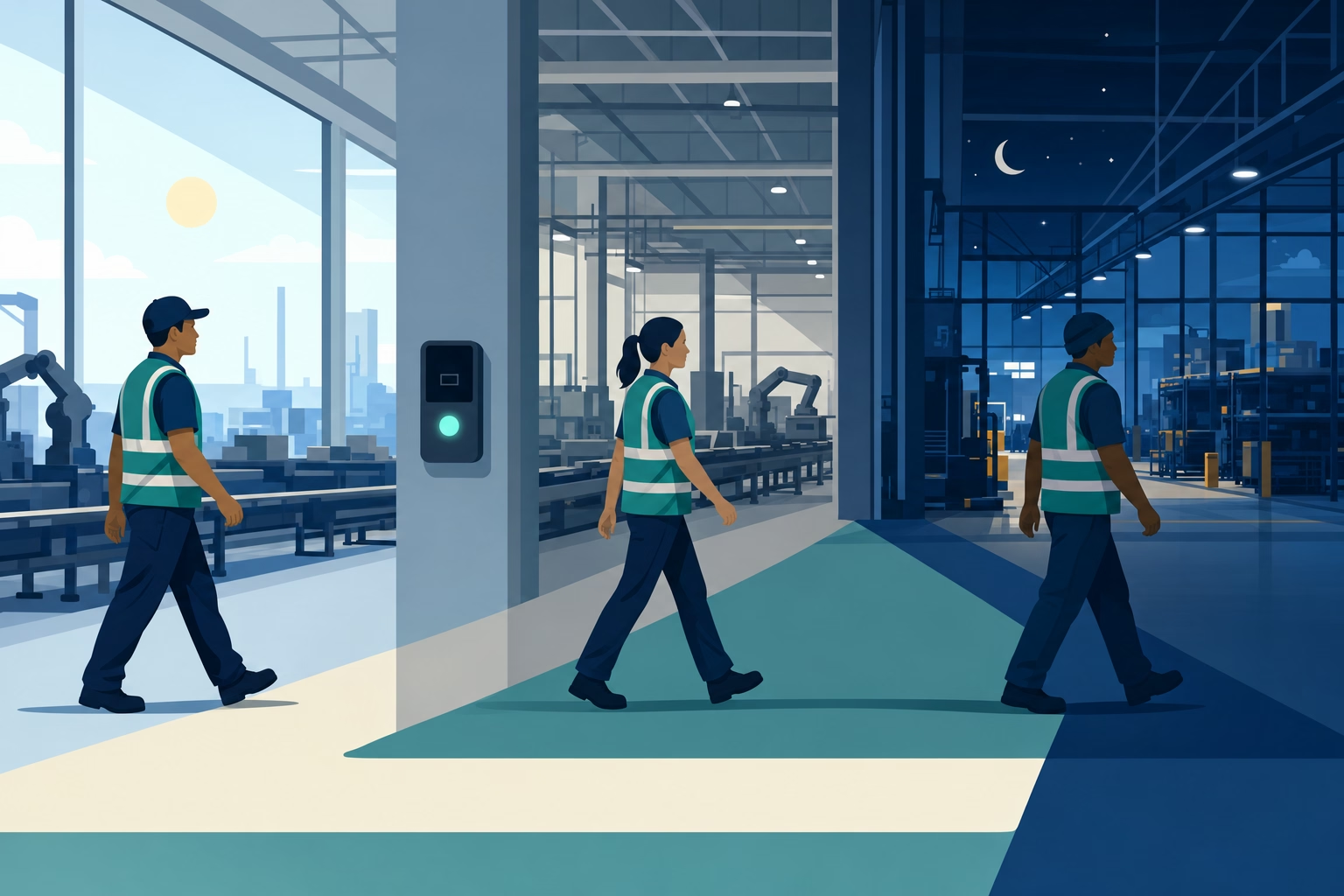
It’s 3 PM. You’re coming in for second shift and the day crew is gone. Nobody told you the conveyor belt is acting up, there’s a customer complaint pending, and the new guy called in sick. You spend the first hour figuring out what’s going on instead of actually working.
That’s what happens without shift notes.
Shift notes are the written handoff between outgoing and incoming crews—ongoing issues, completed tasks, pending priorities, and anything weird that happened. According to Joint Commission research, structured handoffs reduce errors by 30–40%. In 24-hour operations where crews never overlap, they’re the only way information survives shift changes.
The bottom line
Shift notes aren’t bureaucracy—they’re how the incoming team knows what they’re walking into. Five minutes of writing saves an hour of confusion.
What Should You Include in Shift Notes?
Focus on what the next crew actually needs to know:
| Category | What to Include | Example |
|---|---|---|
| Ongoing issues | Problems requiring follow-up | ”Forklift #3 making grinding noise—maintenance ticket submitted” |
| Completed tasks | What got done | ”Received shipment from ABC Corp, staged in Bay 2” |
| Pending priorities | What’s next and why | ”Customer X needs callback by 5 PM—complaint about order #4521” |
| Equipment status | Anything not working normally | ”Printer in break room jammed, IT coming tomorrow” |
| Staffing changes | Call-offs, coverage, schedule swaps | ”Maria covering for James until 7 PM” |
| Safety incidents | Per OSHA requirements | ”Near-miss in loading dock—wet floor, cones placed” |
What to skip: Routine stuff that happens every shift (unless something was different), personal opinions, and vague statements like “machine acting weird” without specifics.

The 10-Minute Handoff Ritual
Per AHRQ TeamSTEPPS research, structured handoffs dramatically reduce errors. Here’s a ritual that works:
- Skim the notes — Get the overview
- Review top 3 issues — What’s broken, pending, or urgent?
- Confirm ownership — Who’s handling what?
- Check flags — Safety concerns, equipment status, inventory
- Agree on priorities — What gets done first?
Writing tips: Update notes throughout your shift, not in the last 10 minutes. Be specific—“Color printer Room 3, error E23, IT ticket #4567” beats “printer broken.” Put urgent items first.


Templates by Industry
Healthcare
- Patient census: Admissions, discharges, condition changes
- Critical patients: Who needs extra attention and why
- Medication: New orders, discontinued meds, missed doses
- Family communication: Concerns raised, conversations had
- Staffing: PRN staff called in, break coverage
Manufacturing/Warehouse
- Production: Units completed, targets met/missed, run status
- Equipment: Problems, maintenance done, downtime
- Quality: Defects, failed inspections, corrective actions
- Inventory: Raw materials, shortages, shipments received
- Priorities: Rush orders, deadlines, what’s urgent for next shift
Digital vs Paper: Which Works Better?
Digital gives you searchability, automatic timestamps, and access from anywhere. Paper requires no training and works when computers don’t.
Most operations use both—digital for the official record, paper for quick notes when you’re not near a computer. The key is consistency: one place everyone knows to check.
Common Problems and Fixes
| Problem | Fix |
|---|---|
| Notes too long, nobody reads them | Emphasize brevity; separate urgent from routine |
| Vague or incomplete | Use templates with required fields |
| People forget to write them | Make it part of shift-closing procedures |
| Notes get lost | One consistent location—digital or physical |
Is This Worth the Effort?
Yes, if you run 24/7 operations, need compliance documentation, or have teams that never see each other face-to-face.
Maybe not if notes become so bureaucratic that people skip them, or so vague they don’t help anyway. The goal is useful information, not paperwork for its own sake.
Sources
Frequently Asked Questions
What are shift notes?
Written handoffs from outgoing to incoming crews. They cover ongoing issues, completed tasks, pending priorities, and anything unusual. Research shows structured handoffs reduce errors by 30–40%.
What should be included in shift notes?
Ongoing issues, completed tasks, pending priorities, equipment problems, safety incidents, and staffing changes. Be specific: “Forklift #3 grinding noise, ticket submitted” not “equipment issue.”
Digital or paper?
Both work. Digital gives you searchability and timestamps. Paper works when computers don’t. Most operations use a hybrid—pick one primary system everyone knows to check.
How long should shift notes be?
A few bullets for quiet shifts, up to a page for complex operations. Brief notes get read; lengthy reports get skimmed. Prioritize urgent items at the top.