What Are the US Federal Holidays in 2026?
2026 US federal holiday calendar with all 11 official dates, plus state observances and religious holidays. Includes holiday pay rules and scheduling tips for businesses.

2026 US federal holiday calendar with all 11 official dates, plus state observances and religious holidays. Includes holiday pay rules and scheduling tips for businesses.

Learn what lost time incident rate (LTIR) means, how to calculate workplace injuries causing missed days per 100 employees (formula: incidents × 200,000 ÷ hours worked), industry benchmarks (manufacturing 0.9, construction 1.8, healthcare 1.2), and proven safety improvement strategies.

Learn what retrenchment strategy means, how planned workforce reduction helps businesses survive financial difficulty (20-30% cost reduction), types including layoffs vs voluntary programs, legal requirements (WARN Act 60-day notice), and best practices minimizing negative impacts.

Learn what salary sacrifice car schemes mean (trading pre-tax salary for company vehicle), tax savings (20-40% lower costs vs personal purchase), how lease arrangements work, eligibility requirements, benefit-in-kind calculations, and comparison with car allowances and mileage reimbursement.

Learn what split shift schedules mean (workdays divided into 2+ periods with unpaid breaks), industries that use them, California split shift premium requirements, benefits, challenges, and best practices for implementation.

Learn what staggered shifts mean (employees starting and ending at different times), benefits like extended coverage hours without overtime, reduced crowding, and flexible scheduling, plus implementation strategies and common staggered shift patterns.

Learn the 7 stages of employee life cycle (attraction, recruitment, onboarding, development, retention, offboarding, advocacy), best practices for each stage, metrics to track, and strategies to improve employee experience and retention.

Learn what employee empowerment means, how giving workers autonomy and decision-making authority improves engagement (23% higher), productivity (18% increase), and retention (31% lower turnover), plus implementation strategies and common challenges.

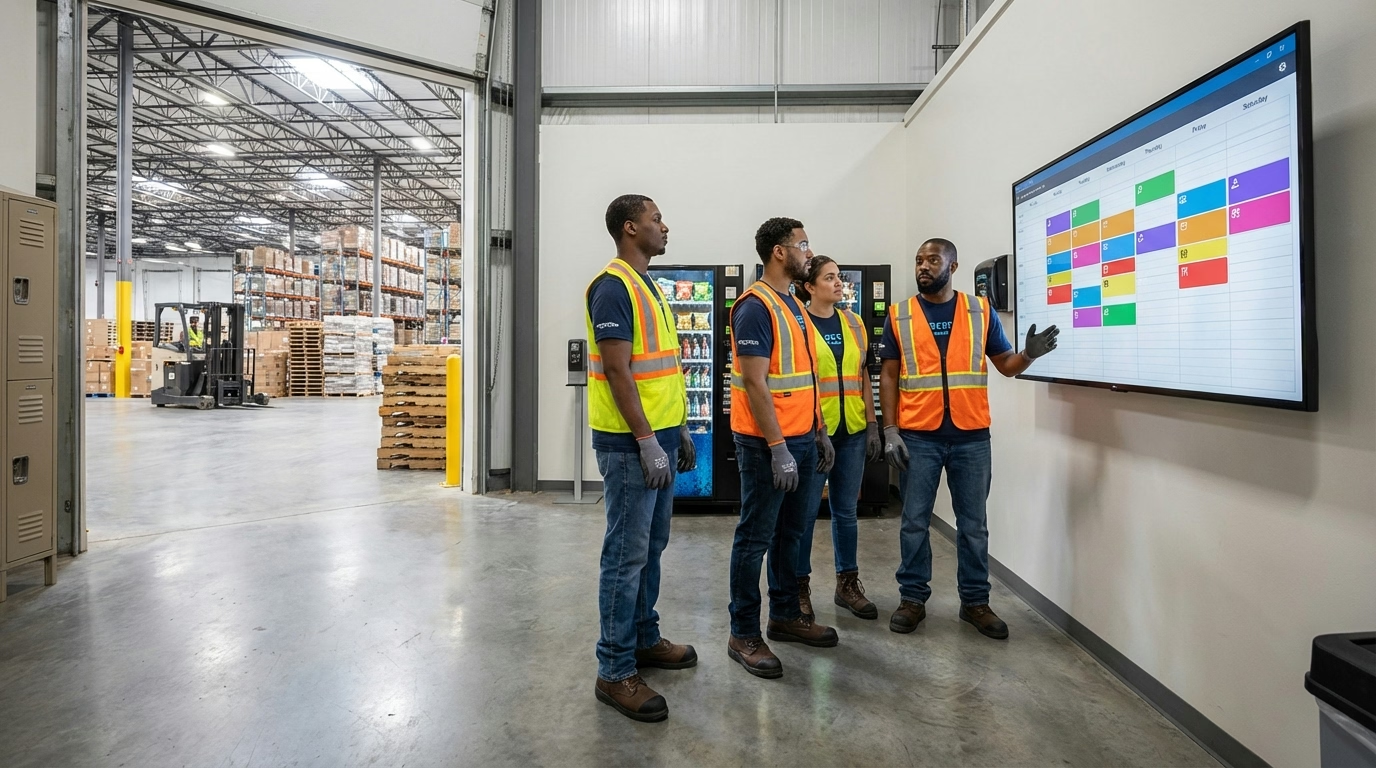
Learn what employee rosters are (schedules showing employee shifts, assignments, and contact info), types of rosters (shift, duty, on-call), benefits, common mistakes, and best practices for creating effective work schedules.

Learn what employee tardiness means (chronic late arrivals to work), costs averaging $1,800 per employee annually, common causes including transportation and burnout, how to track patterns, and proven strategies to reduce chronic lateness.

Learn what employment settlement agreements are (legally binding contracts resolving workplace disputes), typical components including releases and severance ($2,000-$50,000+), common types (termination, discrimination, wage claims), and best practices.

Learn what absenteeism means (unscheduled employee absences), direct and indirect costs averaging $3,600 per employee annually, common causes including illness and disengagement, how to measure absenteeism rates, and proven prevention strategies.

Learn what achievement culture means (organizational focus on goal attainment and performance excellence), how it differs from other cultures, implementation strategies, benefits, challenges, and best practices for sustainable high performance.

Learn what broadbanding means (consolidating salary grades into fewer, wider pay bands), how it differs from traditional structures, implementation steps, benefits (flexibility, lateral growth), challenges (compression risk), and best practices for modern compensation systems.

Learn what constructive criticism means (specific, actionable feedback delivered respectfully), how it differs from destructive criticism, SBI framework (Situation-Behavior-Impact), benefits (performance improvement, engagement), delivery techniques, and best practices for giving and receiving feedback.

Learn what discretionary time off (DTO) means, how unlimited PTO policies work, benefits like improved retention (25% higher) and reduced administrative costs, challenges including potential underuse, and proven implementation strategies for trust-based leave systems.

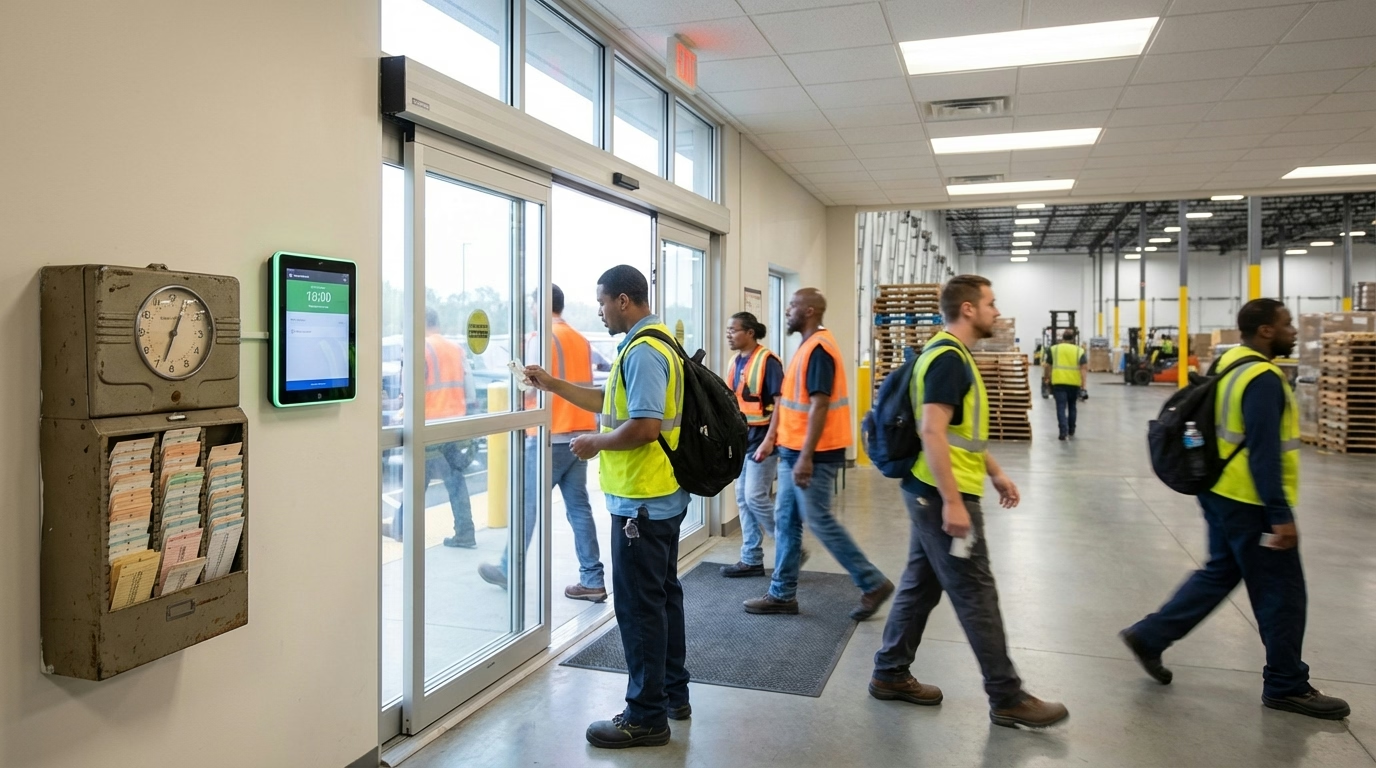
Learn what buddy punching means in time theft, how coworkers clocking in for absent employees costs U.S. businesses $373 million annually, detection methods, legal consequences, and proven prevention strategies including biometric systems and GPS verification.

Learn what double time pay means in payroll, when workers earn 2× their hourly rate, California's strict double time requirements (after 12 hours/day or 8 hours on 7th day), federal holiday pay practices, and how to calculate double time correctly.

Learn what exempt employee means under FLSA, salary minimum ($684/week federal, higher in some states), duties tests for executive/administrative/professional roles, no overtime eligibility, and the risks of misclassification ($100M+ in annual settlements).

Learn what shift differential means in payroll, how premium pay for nights, weekends, and holidays works, typical differential rates (10–25% or $1–$5/hour), when it's required vs voluntary, and strategies to structure competitive shift differential policies.